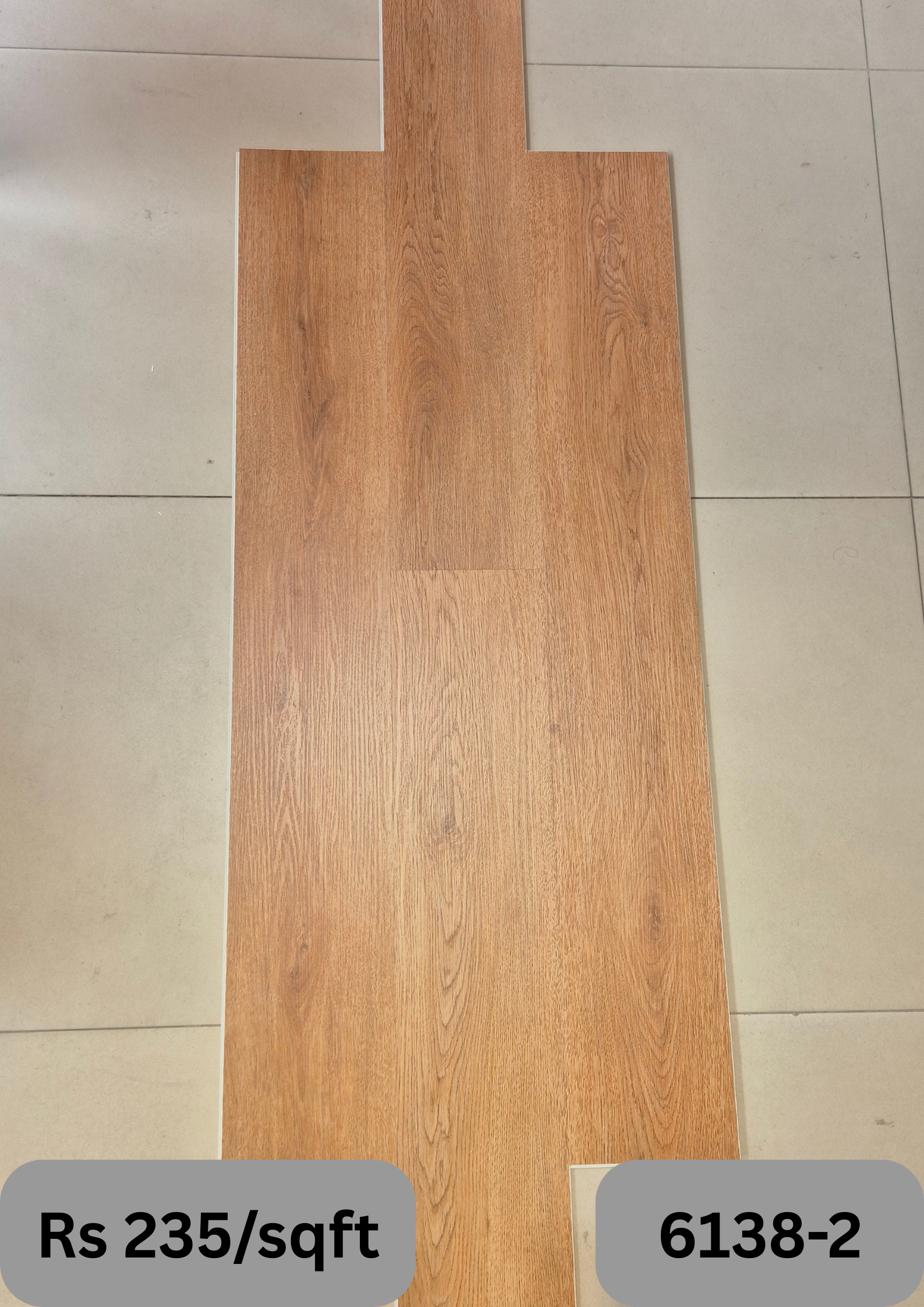
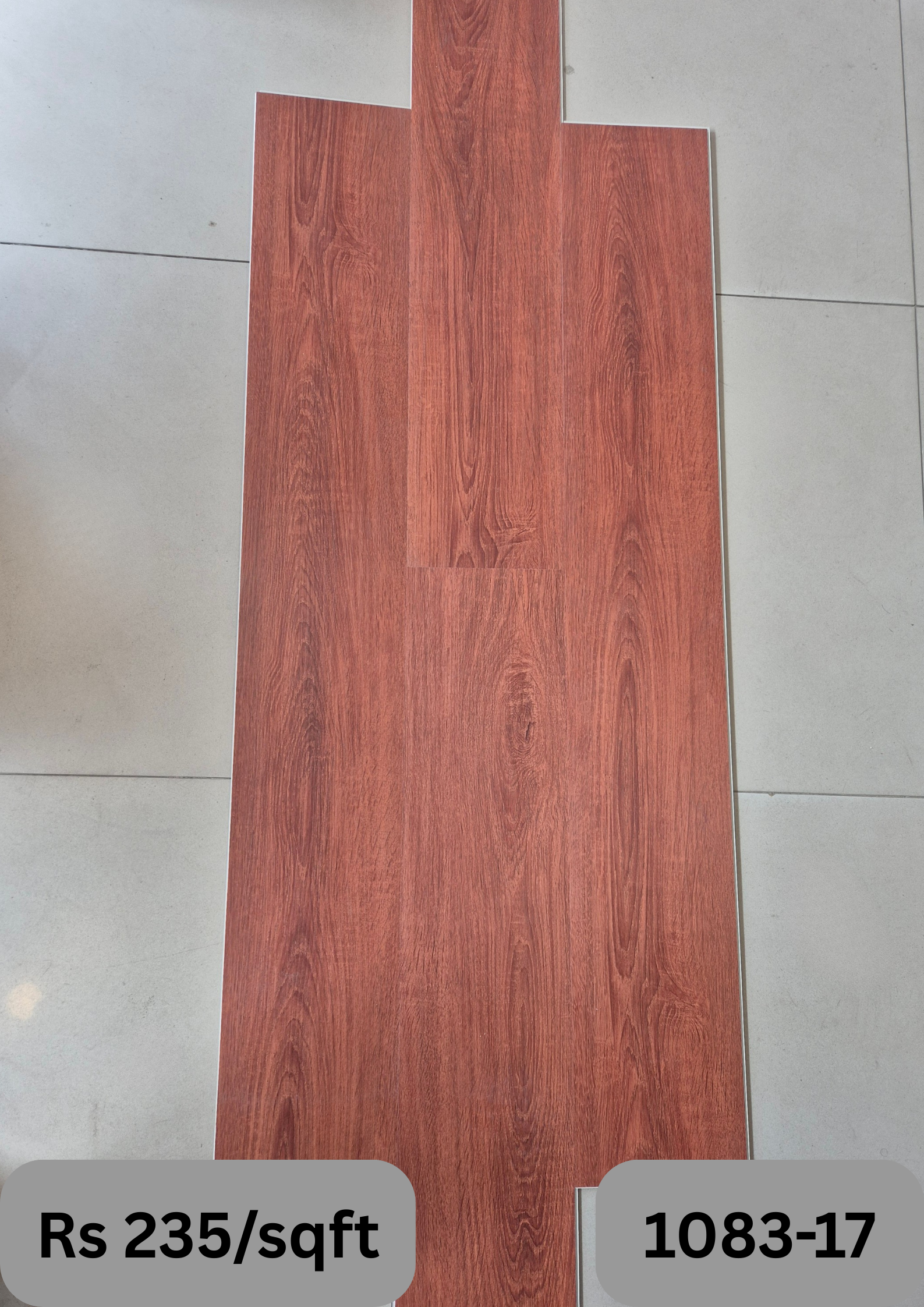
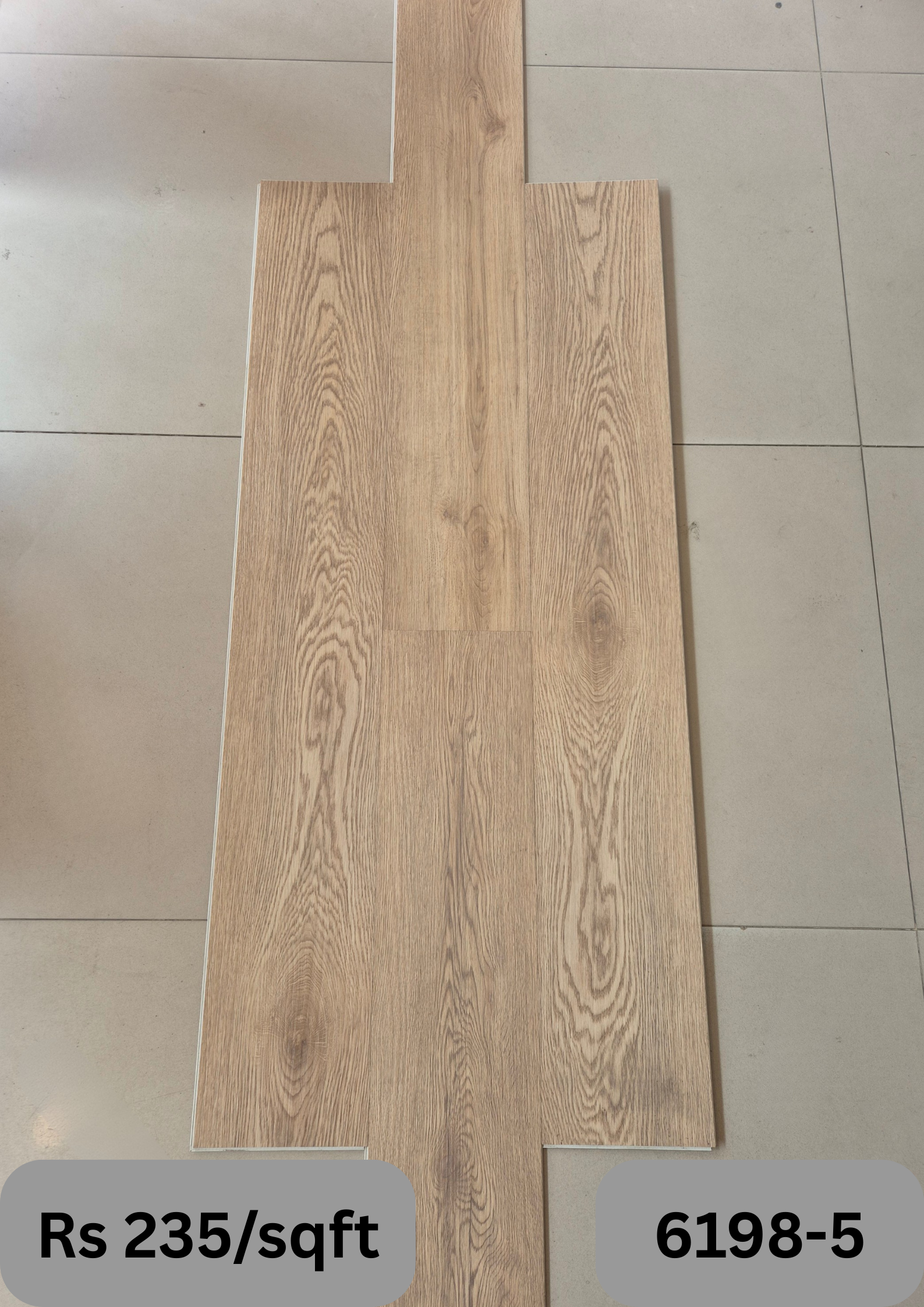
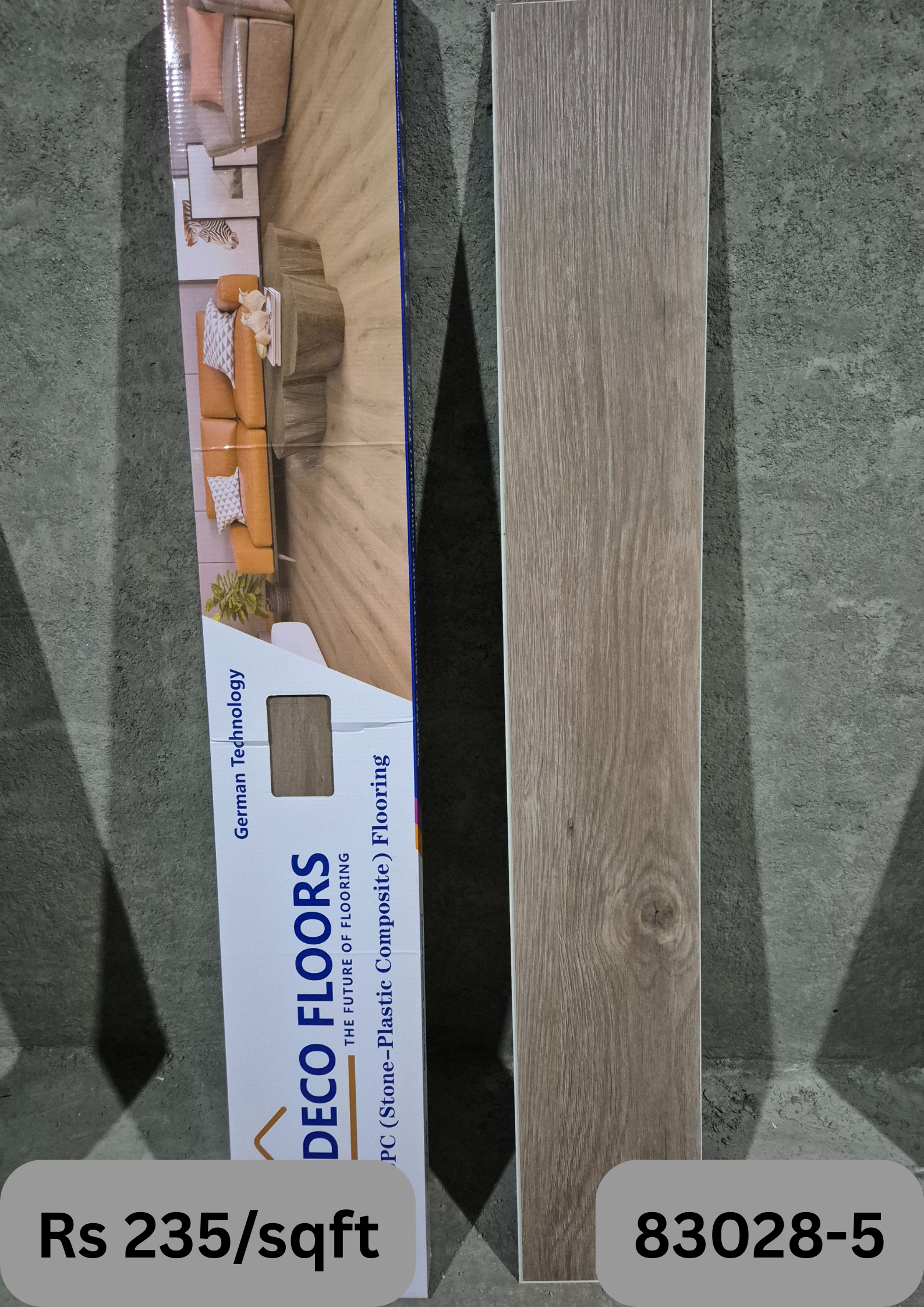
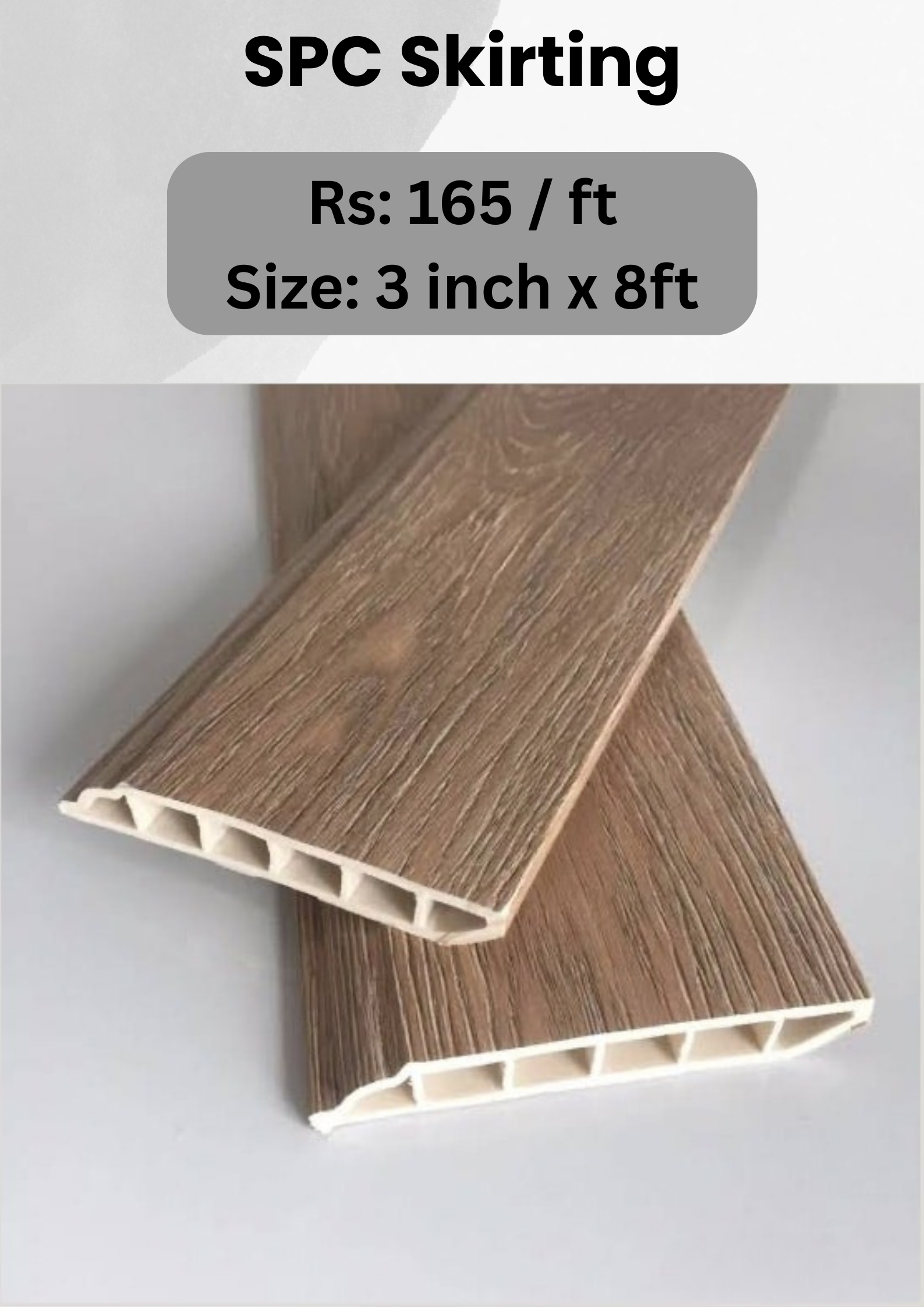
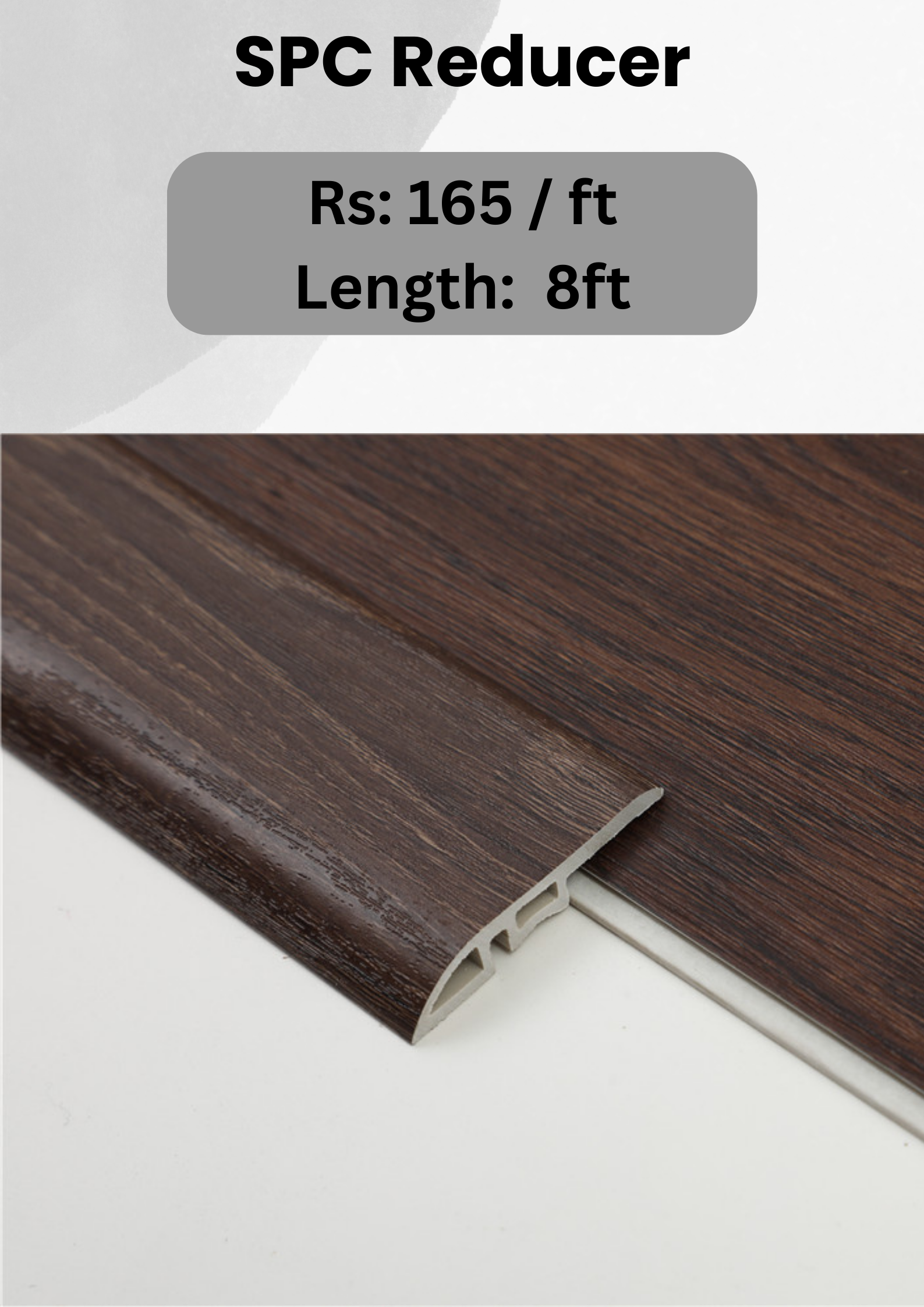
Stone powder and plastic are combined to create SPC (Stone Plastic Composite) flooring, a sort of contemporary, waterproof flooring. To put it simply, it is a sturdy, long-lasting floor that resembles wood or tiles but requires far less upkeep.
It can be used in bathrooms, kitchens, and other places where water might spill because it is completely waterproof. Additionally, SPC flooring is termite-proof, scratch-resistant, and pleasant to walk on. Because of its click-lock mechanism, installation is quick and simple and doesn’t require a lot of building work.
To put it briefly, SPC flooring is a durable, fashionable, and low-maintenance flooring choice that is suitable for both residential and commercial settings.
Thickness: 5.2mm
Features of SPC Flooring
100% Waterproof – Does not get damaged by water or moisture
Strong & Durable – Resistant to scratches, dents, and heavy use
Easy Installation – Click-lock system, no glue needed
Low Maintenance – Easy to clean with sweeping and mopping
Stable in All Weather – Does not expand or shrink with temperature changes
Comfort & Soundproof – Reduces noise and feels comfortable underfoot
Stylish Designs – Looks like real wood, stone, or tiles
Durability
Weather Resistance
Low Maintainance
Aesthetic Options
Versatility
Noise Reduction
Customization Options
Chemical Resistance
Applications of SPC Flooring
Homes – living rooms, bedrooms, kitchens, and bathrooms
Hospitals & Clinics – clean and hygienic environments
Schools & Institutions – classrooms and training centers
Renovation Projects – quick upgrade without heavy construction
Uses of Waterproof Flooring in Nepal
As SPC flooring is long-lasting and waterproof, it is frequently utilized in both residential and commercial settings in Nepal. It is frequently installed in living rooms, bedrooms, kitchens, and bathrooms. In towns like Kathmandu and Pokhara, it is particularly well-liked in apartments and flats. Because of its capacity to withstand high foot traffic and wetness, it is often utilized in offices, stores, showrooms, hotels, restaurants, hospitals, and clinics. Additionally, SPC flooring is a popular option for rehabilitation projects in Nepal since it can be swiftly installed without requiring significant construction and works well in the nation’s diverse weather conditions.